

Manifesto
Who we are, what we believe in, and what we invite you to discover together
Will of the Free Wind
These are the times when it is beginning to seem as if the world as we know it is hanging on the edge of a cliff, staring into the abyss. The line between sanity and insanity appears to be unexpectedly thin… or perhaps we are already beyond it. Just look around: war after war after imposed war, followed by yet another war; images of unimaginable evil being flashed across our screens every minute of every day, evil which we feel powerless to stop; the destruction, contamination, and pollution of nature – the living world; microplastics and other horribleness in the air, in the water, even in our own bodies; artificial “intelligence” taking over the fruits of human creation and increasingly controlling various aspects of our lives; the concentration of technological, military, and political power; uncertainty about the future… And on and on it goes.
And yet. We, our Mother Earth’s children, just want to live meaningful lives; to create, not destroy; to make beautiful dreams a reality, instead of sinking into the depths of fear, panic, and hatred.
Why, then, do we sense – sometimes regularly, at other times more intensely – a certain longing in our souls, anxiety in our hearts, discomfort in our bodies? Whom are we worrying about? Ourselves and our loved ones, and all living beings. What are we longing for? More certainty around us. We know it exists, so we seek it, we find it, and share it with you.
In the age of digital “realities” and social networks that are not really that social [see studies on how scrolling through your phone or tablet causes irritability, lowers self-confidence, and atrophies the brain], in these times of pretense, we feel a hunger for what is true, eternal, and real.
Core values and principles
Free speech and independent thought, not subject to any political party or force, religious, state, or similar institution.
Free speech and independent thought, not subject to any political party or force, religious, state, or similar institution.
We regard nature not as a separate entity that we inhabit and/or consume, but as Mother Earth, of which we are an integral part.
On the basis of the fact that in this world only the laws of nature are inevitable, in our analysis of social and political phenomena we are always looking for causal relationships and cui bono.
We replace the myth of linear progress, supposedly leading ever upward and ever forward, and the greed for excessive economic growth with the understanding that true abundance is only that which is organic: that which grows on Earth and that which is born within us.
We are certain that the axis of civilization is empathy, while the pathological, systemic lack of it is a disorder that tears apart both communities and individuals. Therefore, the goal is to restore harmony both within and around us.
We do not view civilization, culture, and philosophy as the exclusive prerogative of the so-called West. We reject intellectual arrogance that readily dismisses the experience and spirituality accumulated by humanity over thousands of years. We embrace other cultures not to reject or negate our own, but to enrich ourselves through them.
Bearing in mind that the otherwise limitless potential of human beings is either enabled or blocked by environmental factors (“those who live with wolves, learn to howl”), which, unlike nature, are changeable, we choose to shift responsibility to environmental factors and in doing so open up spaces for active participation in the creation of our shared world.
We do not equate formal education with wisdom, nor do we automatically place official titles at the top of the hierarchy of intelligence. We believe that institutional education often acts only as a barrier or a filter, and that everyone has the potential for critical thinking; all that is needed for it to develop are favourable conditions.
Human beings are part of nature, operating at her pace, which no technology can accelerate or reprogram. We reject the illusion of modernity’s speed and instead seek to return to forms of storytelling that are more natural to humans, such as live storytelling, authentic thought, and unstaged images.
To where the compass points
In our storytelling, the centre-stage always belongs to the human being.
We focus on what reflects to us the essence of our times and address topics that are important to us and remain untold or are only told superficially, rather than in depth.
Telling the story in depth means digging down to the structural causes of a phenomenon, including its broader historical, economic, and psychosocial context.
To tell a story in depth is to understand how and why the pendulum has swung too far to either side, and to help restore it to a position of balance, as we see it.
To tell a story in depth from the heart is to share insights that come as if by divine gift. The kind you would listen to at night by the campfire with your eyes wide open, as fragments of the infinite world in which we all live together, and which would move you in such a way that you would decide here and then that tomorrow, first thing in the morning, you would tell someone that you love them, and you wouldn’t lie; you would plant a tree, help someone in need, and feed someone who is hungry.
We define margins as blind spots in our shared social field of vision. They are, of course, largely shaped by the media, which dictates what we should and should not see. In today’s world, there are countless margins, and they all have a common denominator. It is alienation: social, psychological, emotional, political, and spiritual alienation.
We believe that marginalization itself is not inherently bad if chosen consciously; otherwise, it robs a person of the power to be themselves and fully realize their potential on this Earth.
We present reality as we see and understand it, using subjective artistic means in our storytelling. We do not try to cover up the truth with a false objectivity, the existence of which is, in fact, impossible.
We consider technology to be neutral in principle, but we understand that it takes on the weight of the system and interests that control it. At the same time, we do not follow the logic of “the cause is also the cure”, and do not consider technology to be an inherent good or technological solutions to be a panacea.
As our desired future flickers in the distance like a mirage that could vanish at any moment, we invite you to look within yourself, at your neighbour, and also at “the other”: to be wide-ranging in your understanding, but to act here and now.
Our damaged relationship not only with nature, but also with each other, can only be restored, to put it poetically, by walking barefoot together in the forest at dawn. In other words, simply, naturally, from the heart, but with compassion and healthy humour, as if today was, once again, the best day of our lives.
And that is precisely why we do the storytelling that we do: to remember who we are and where we came from, and to inspire each other to live authentically.
“Many a time I thought I would not return, but the books went ahead of me.”
— Motiejus Baltūsis, book smuggler from the village of Geruliai in the Griškabūdis district, Suvalkija, Lithuania, c. end of 19th century
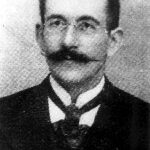
What would the book smugglers say?
The name of our organisation was not, of course, a random choice. After all, there is no such thing as a coincidence. We did not come from nowhere, and we are not going nowhere. What matters is that the journey itself be interesting, meaningful, and dedicated to good.
Istornešiai is a compound word (to carry + stories in Lithuanian) that rhymes with knygnešiai (to carry + books) – i.e., the book smugglers that appeared out of dire necessity in the second half of the 19th and continued their work until early 20th century. If it weren’t for them, who knows, maybe today we wouldn’t be writing in Lithuanian, and you wouldn’t be reading this.
Let us briefly recall who they were.
In 1864, much to everyone’s dismay, the Tsar of the Russian Empire issued an order that banned all Lithuanian press in Latin script. As if the word given to this land by God, blessed by the gods, was a crime.
Thus, our ancestors, who had suffered generations of serfdom, were faced with yet another enormous challenge after the two peasant uprisings. This time it was about defending themselves not only from physical destruction, but also, and most importantly, from within.
When those courageous souls began to “illegally” transport and secretly distribute Lithuanian publications, only about a third of adults in our lands could read and write. Most of these brave humans, almost 90%, were peasants, among the poorest of the poor – the landless and the smallholders.
From the Empire’s point of view, these people – who lived by their conscience – were serious political criminals. As such, they were imprisoned, fined, and deported. Despite this, they continued to distribute the Lithuanian word, to share it, read it, understand it all, to preserve and to pass it on to us. They lived meaningful lives.
A word can only exist if it is accompanied by freedom.